- Blog
- XOF Explained: The Currency Behind West Africa’s Most Connected Economies

September 15, 2026
XOF Explained: The Currency Behind West Africa’s Most Connected Economies
Learn how the XOF currency works and the best way to send money home to West Africa from the UK, Canada & Europe. Enjoy zero transfer fees and fast payouts with Yousend.

Peter Omoyele
Reading writer
If you have ever sent money to Côte d’Ivoire, Senegal, Mali, or any of the other French-speaking nations of West Africa, you have encountered the XOF, whether you knew it by name or not. It appears on receipts, bank statements, and transfer confirmations across eight countries. It is the currency your recipient holds in their hand when the money arrives.
Yet for most people sending money home, the XOF remains a mystery. What is it? Who controls it? Why do eight different countries share the same currency? And what does any of this mean for you when you send money home?
This article answers all of that, plainly, clearly, and without the economics lecture.
What Is XOF?
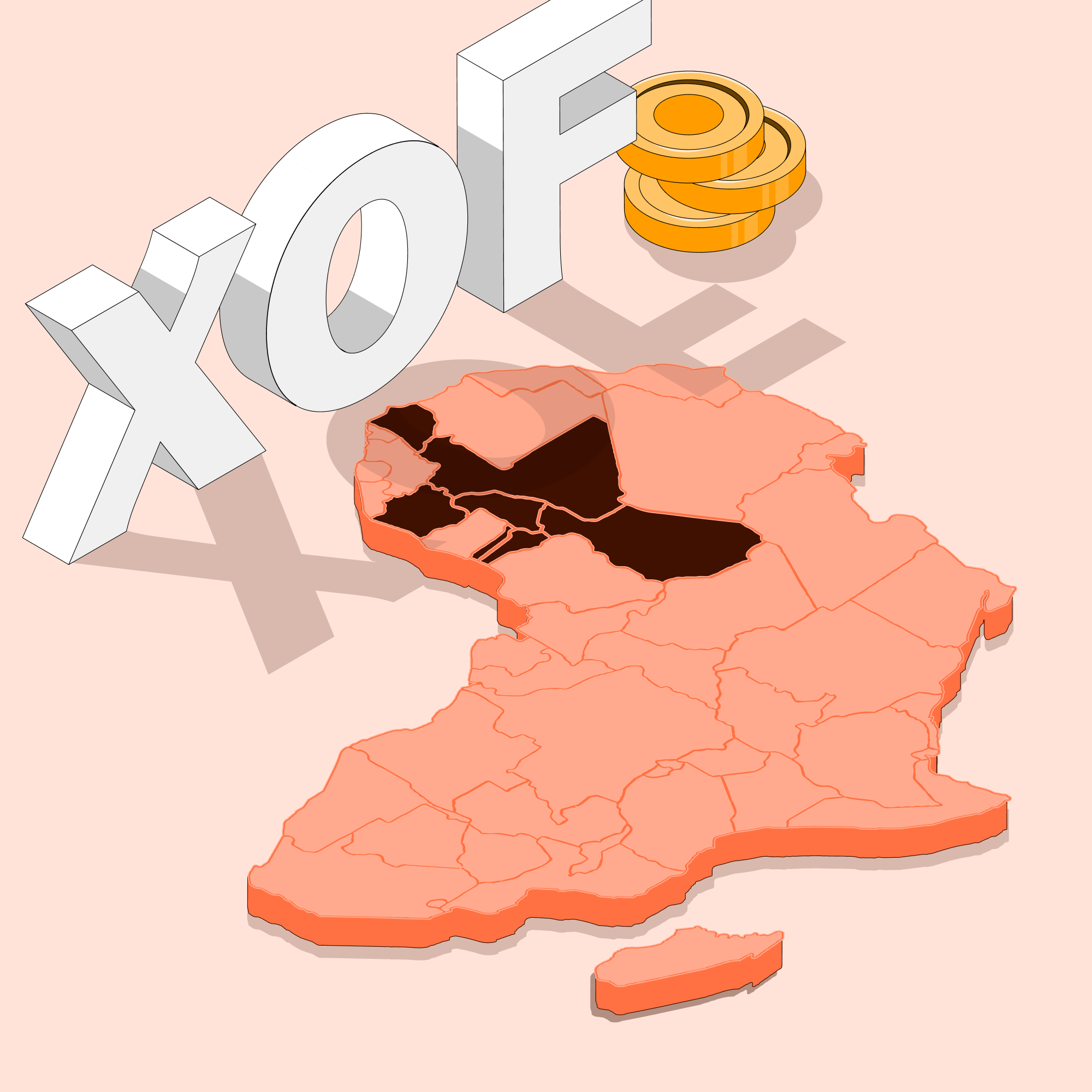
XOF is the currency code for the West African CFA Franc, known in French as the Franc CFA de l’Afrique de l’Ouest. It is the official currency of eight West African nations, all of which are francophone, meaning French-speaking, and all of which are members of a monetary union called the West African Economic and Monetary Union, or WAEMU.
The eight countries that use XOF are:
- Côte d’Ivoire
- Senegal
- Mali
- Burkina Faso
- Benin
- Togo
- Niger
- Guinea-Bissau
Together, these countries form one of the most economically integrated regions on the African continent. They share a currency, a central bank, and a set of monetary policies, which has significant implications for trade, investment, and for anyone sending money across their borders.
A Brief History of XOF
The CFA Franc has a long and contested history. It was introduced in 1945, originally as the Franc des Colonies Françaises d’Afrique, the Franc of the French Colonies of Africa. When the countries that use it gained independence in the 1960s, the currency remained, its name reinterpreted as the Franc de la Communauté Financière Africaine, the Franc of the African Financial Community.
For decades, the CFA Franc was pegged to the French Franc. When France adopted the Euro in 1999, the peg transferred to the Euro. Today, one Euro is fixed at 655.957 XOF, a rate that has not changed since 1994.
That fixed exchange rate is one of the defining features of the XOF. It means that the currency does not float freely on international markets. Its value relative to the Euro is guaranteed by the French Treasury, which has historically maintained a guarantee account for the WAEMU central bank.
This arrangement has been both praised and criticised. Supporters argue that it provides monetary stability and protects the region from the inflation and currency volatility that have affected other African economies. Critics argue that it limits monetary sovereignty and keeps the region economically tied to France long after political independence.
The debate continues. What is not debated is that the XOF is stable, and for the diaspora sending money home, that stability matters.
Who Controls XOF?
The XOF is issued and managed by the Banque Centrale des États de l’Afrique de l’Ouest, the Central Bank of West African States, known by its French acronym BCEAO.
The BCEAO is headquartered in Dakar, Senegal, and serves all eight member states. It sets monetary policy for the entire WAEMU zone, manages foreign exchange reserves, and oversees the banking systems of its member countries.
Because all eight countries share a single central bank, there is no currency risk when moving money between them. Sending XOF from Côte d’Ivoire to Senegal is equivalent to sending it within the same country, the currency does not change, the rate does not fluctuate, and there are no conversion costs.
This is one of the most underappreciated features of the XOF zone for anyone operating across West Africa.
Why the XOF Zone Matters for the Diaspora
The West African francophone diaspora is one of the largest and fastest-growing immigrant communities in both the UK and Canada. Ivorian, Senegalese, Malian, and Burkinabè communities are established and growing in cities like London, Birmingham, Toronto, and Montreal.
For these communities, sending money home is not occasional; it is a monthly commitment. Rent for parents. School fees for siblings. Medical bills that cannot wait. The house that is slowly going up, brick by brick, transfer by transfer.
And yet, for a long time, the XOF corridor was underserved by remittance technology. The tools built for the Anglophone African diaspora, optimised for NGN, KES, and GHS, did not always extend cleanly into XOF territory. The francophone diaspora was often left with fewer options, higher fees, and slower transfers.
That is changing.
What Makes Sending Money to XOF Countries Different
A Single Currency Across Eight Countries
Because all eight WAEMU member states share the XOF, a single transfer can reach recipients across a wide geographic area without currency conversion at the destination. If you are sending to a family member who moves between Côte d’Ivoire and Burkina Faso, the currency they receive is the same in both places.
Fixed to the Euro
The XOF’s peg to the Euro means that the GBP/XOF and CAD/XOF exchange rates move with the EUR/GBP and EUR/CAD rates respectively. For senders in the UK and Canada, this means the rate you get is tied to the Euro, which tends to be more stable than many other African currency pairs.
It also means that when the Euro is strong against the pound or the Canadian dollar, your recipient receives less. When it is weak, they receive more. Understanding this dynamic helps you make more informed decisions about when to send.
Mobile Money Infrastructure
The XOF zone has one of the most developed mobile money ecosystems in Africa. Services like Orange Money, Wave, and MTN Mobile Money are widely used across the region, meaning recipients do not always need a bank account to receive funds. Mobile money has dramatically expanded financial inclusion across the WAEMU zone, particularly in rural areas.
For senders, this means your transfer can reach someone who does not have a traditional bank account, as long as the remittance platform supports mobile money payouts in the destination country.
The Scale of the Opportunity
The remittance flows into the XOF zone are significant and growing.
Côte d’Ivoire is the largest economy in the WAEMU zone, accounting for roughly 40% of the bloc’s GDP. It is also one of the largest recipients of remittances in the region. Senegal received remittances equivalent to approximately 10% of its GDP in recent years, one of the highest ratios on the continent.
Across the WAEMU zone, remittances are not a supplement to the formal economy. For millions of families, they are the economy. The money arriving from the diaspora in the UK, Canada, France, and the United States funds education, healthcare, housing, and small business investment at a scale that dwarfs most forms of official development aid.
How Yousend Supports the XOF Corridor
Yousend recently launched XOF corridor support, making it possible to send money directly from the UK and Canada to Francophone West Africa, fast, transparently, and with zero transfer fees.
This is part of a broader expansion that reflects where the diaspora actually is. The African diaspora is not monolithic. It includes the Nigerian community in Woolwich, the Ghanaian community in Brixton, and the Ivorian and Senegalese communities in cities across the UK and Canada. Building for all of them, not just the Anglophone majority, is what it means to be built for the African diaspora.
Our stablecoin settlement infrastructure operates the same way for XOF as it does for NGN, KES, and GHS. There is no correspondent banking chain, no prefunded float, and no artificial delay. Transfers move in under 15 seconds on average, 24 hours a day, seven days a week.
Zero transfer fees. Transparent rates. Live human support, no chatbots, ever.
The Bottom Line
The XOF is not just a currency. It is the financial infrastructure behind eight countries, millions of families, and one of the most economically integrated regions on the African continent.
For the francophone West African diaspora in the UK and Canada, it is the currency your family uses every day, for groceries, school fees, rent, and the thousand small things that a monthly transfer makes possible.
Understanding it does not require an economics degree. It requires knowing that the money you send matters, that the corridor you send it through has historically been underserved, and that better infrastructure now exists to move it faster, cheaper, and more honestly than ever before.
Ready to send money to Francophone West Africa?
Yousend now supports XOF payouts from the UK and Canada. Zero transfer fees. Transfers in under 15 seconds. Download the app today.
And if this resonated, we’d love to keep the conversation going. Join our WhatsApp Channel. Follow Yousend on [Instagram] [Twitter] [TikTok] [LinkedIn], where we share rates, stories, and everything in between.